

|
|
|
3.1 Sharing the Transmission Medium
You are the network manager of a company. You have a Source-User link requirement given to you. In response you install a premises fiber optic data link. The situation is just like that illustrated in Figure 2-1. However, the bandwidth required by the particular Source-User pair, the bandwidth to accommodate the Source-User speed requirement, is much, much, less than is available from the fiber optic data link. The tremendous bandwidth of the installed fiber optic cable is being wasted. On the face of it, this is not an economically efficient installation.
You would like to justify the installation of the link to the Controller of your company, the person who reviews your budget. The Controller doesn't understand the attenuation benefits of fiber optic cable. The Controller doesn't understand the interference benefits of fiber optic cable. The Controller hates waste. He just wants to see most of the bandwidth of the fiber optic cable used not wasted. There is a solution to this problem. Don't just dedicate the tremendous bandwidth of the fiber optic cable to a single, particular, Source-User communication requirement. Instead, allow it to be shared by a multiplicity of Source-User requirements. It allows it to carve a multiplicity of fiber optic data links out of the same fiber optic cable.
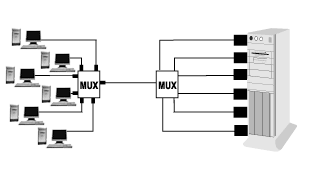
The technique used to bring about this sharing of the fiber optic cable among a multiplicity of Source-User transmission requirements is called multiplexing. It is not particular to fiber optic cable. It occurs with any transmission medium e.g. wire, microwave, etc., where the available bandwidth far surpasses any individual Source-User requirement. However, multiplexing is particularly attractive when the transmission medium is fiber optic cable. Why? Because the tremendous bandwidth presented by fiber optic cable presents the greatest opportunity for sharing between different Source-User pairs.
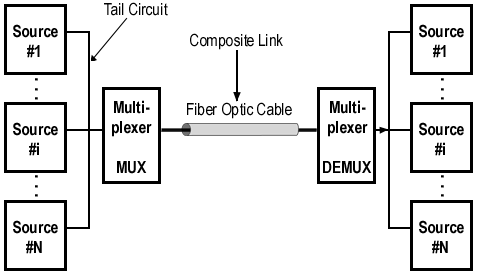
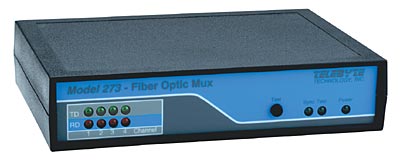
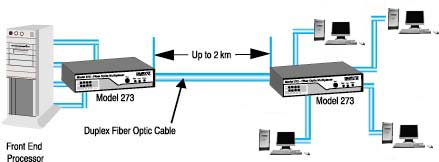
Conceptually, multiplexing is illustrated in Figure 3-1. The figure shows 'N' Source-User pairs indexed as 1, 2, . . . There is a multiplexer provided at each end of the fiber optic cable. The multiplexer on the left takes the data provided by each of the Sources. It combines these data streams together and sends the resultant stream out on the fiber optic cable. In this way the individual Source generated data streams share the fiber optic cable. The multiplexer on the left performs what is called a multiplexing or combining function. The multiplexer on the right takes the combined stream put out by the fiber optic cable. It separates the combined stream into the individual Source streams composing it. It directs each of these component streams to the corresponding User. The multiplexer on the right performs what is called a demultiplexing function.
A few things should be noted about this illustration shown in Figure 3-1.
3.3 Wavelength Division Multiplexing (WDM) With Fiber Optic Cable
With WDM a multiplicity of communication links, each for a given Source-User pair, share the same fiber optic cable on the basis of wavelength. The data stream from each Source is assigned an optical wavelength. The multiplexer has within it the modulation and transmission processing circuitry. The multiplexer modulates each data stream from each Source. After the modulation process the resulting optical signal generated for each Source data stream is placed on its assigned wavelength. The multiplexer then couples the totality of optical signals generated for all Source data streams into the fiber optic cable. These different wavelength optical signals propagate simultaneously. This is in contrast to TDM.
The fiber optic cable is thereby carved into a multiplicity of data links - each data link corresponding to a different one of these optical wavelengths assigned to the Sources.
At the User end the multiplexer receives these simultaneous optical signals. It separates these signals out according to their different wavelengths by using prisms. This constitutes the demultiplexing operation. The separated signals correspond to the different Source-User data streams. These are further demodulated. The resulting separated data streams are then provided to the respective Users.
At this point a slight digression is necessary. The focus of this book is on premise data communications, data communications in the local area environment. Notwithstanding, it must be mentioned that WDM has been receiving a tremendous amount of attention within the context of Wide Area Networks (WANs). Both CATV systems and telecommunication carriers are making greater and greater use of it to expand the capacity of the installed WAN fiber optic cabling plant. Within the Wide Area Networking environment the multiplicity of channels carved from a single fiber has increased tremendously using WDM. The increase has led to the term Dense Wavelength Division Multiplexing (DWDM) to describe the newer WDMs employed. Now, back to our main topic.
3.4 Comparing Multiplexing Techniques for the Premises Environment
It is best to compare TDM and WDM on the basis of link design flexibility, speed and impact on BER.
Link Design Flexibility - TDM can be engineered to accommodate different link types. In other words, a TDM scheme can be designed to carve a given fiber optic cable into a multiplicity of links carrying different types of traffic and at different transmission rates. TDM can also be engineered to have different time slot assignment strategies. Slots may be permanently assigned. Slots may be assigned upon demand (Demand Assignment Multiple Access - DAMA). Slots may vary depending upon the type of link being configured. Slots may even be dispensed with altogether with data instead being encapsulated in a packet with Source and User addresses (statistical multiplexing). However, within the context of premises environment there is strong anecdotal evidence that TDM works best when it is used to configure a multiplicity of links all of the same traffic type, with time slots all of the same duration and permanently assigned. This simplest version of TDM is easiest to design and manage in premise data communications. The more complex versions are really meant for the WAN environment.
On the other hand, in the premises environment WDM, generally, has much greater flexibility. WDM is essentially an analog technique. As a result, with WDM it is much easier to carve a fiber optic cable into a multiplicity of links of quite different types. The character of the traffic and the data rates can be quite different and not pose any real difficulties for WDM. You can mix 10Base-T Ethernet LAN traffic with 100Base-T Ethernet LAN traffic with digital video and with out of band testing signals and so on. With WDM it is much easier to accommodate analog traffic. It is much easier to add new links on to an existing architecture. With TDM the addition of new links with different traffic requirements may require revisiting the design of all the time slots, a major effort.
With respect to flexibility the one drawback that WDM has relative to TDM in the premises environment is in the number of simultaneous links it can handle. This is usually much smaller with WDM than with TDM. Nonetheless, advances in DWDM for the WAN environment may filter down to the premise environment and reverse this drawback.
Speed - Design of TDM implicitly depends upon digital components. Digital circuitry is required to take data in from the various Sources. Digital components are needed to store the data. Digital components are needed to load the data into corresponding time slots, unload it and deliver it to the respective Users. How fast must these digital components operate? Roughly, they must operate at the speed of the composite link of the multiplexer. With a fiber optic cable transmission medium, depending upon cable length, a composite link of multiple GBPS could be accommodated. However, commercially available, electrically based, digital logic speeds today are of the order of 1 billion operations per second. This can and probably will change in the future as device technology continues to progress. But, let us talk in terms of today. TDM is really speed limited when it comes to fiber optic cable. It can not provide a composite link speed to take full advantage of the tremendous bandwidth presented by fiber optic cable. This is not just particular to the premises environment it also applies to the WAN environment.
On the other hand, WDM does not have this speed constraint. It is an analog technique. Its operation does not depend upon the speed of digital circuitry. It can provide composite link speeds that are in line with the enormous bandwidth presented by fiber optic cable.
Impact on BER - Both TDM and WDM, carve a multiplicity of links from a given fiber optic cable. However, there may be cross talk between the links created. This cross talk is interference that can impact the BER and affect the performance of the application underlying the need for communication.
With TDM cross-talk arises when some of the data assigned to one time slot slides into an adjacent time slot. How does this happen? TDM depends upon accurate clocking. The multiplexer at the Source end depends upon time slot boundaries being where they are supposed to be so that the correct Source data is loaded into the correct time slot. The multiplexer at the User end depends upon time slot boundaries being where they are supposed to be so that the correct User gets data from the correct time slot. Accurate clocks are supposed to indicate to the multiplexer where the time slot boundaries are. However, clocks drift, chiefly in response to variations in environmental conditions like temperature. What is more, the entire transmitted data streams, the composite link, may shift small amounts back and forth in time, an effect called jitter. This may make it difficult for the multiplexer at the User end to place time slot boundaries accurately. Protection against TDM cross-talk is achieved by putting guard times in the slots. Data is not packed end-to-end in a time slot. Rather, there is either a dead space, or dummy bits or some other mechanism built into the TDM protocol so that if data slides from one slot to another its impact on BER is minimal.
With WDM cross-talk arises because the optical signal spectrum for a given link placed upon one particular (center) wavelength is not bounded in wavelength (equivalently frequency). This is a consequence of it being a physical signal that can actually be generated. The optical signal spectrum will spill over onto the optical signal spectrum for another link placed at another (center) wavelength. The amount of spillage depends upon how close the wavelengths are and how much optical filtering is built into the WDM to buffer it. The protection against cross-talk here is measured by a parameter called isolation. This is the attenuation (dB) of the optical signal placed at one (center) wavelength as measured at another (center) wavelength. The greater the attenuation the less effective spillage and the less impact on BER.
At the present time, clock stability for digital circuitry is such that TDM cross-talk presents no real impact on BER in the context of premises data communications and at the composite link speeds that can be accommodated. The TDM cross-talk situation may be different when considering WANs. However, this is the case in the premise environment. The situation is not as good for WDM. Here, depending upon the specific WDM design, the amount of isolation may vary from a low value of 16 dB all the way to 50 dB. A low value of isolation means that the impact upon BER could be significant. In such situations WDM is limited to communications applications that can tolerate a high BER. Digital voice and video would be in this group. However, LAN traffic would not be in this group. From the perspective of BER generated by cross-talk TDM is more favorable than
WDM.

